what do you need to play mtg standard
Looking to build a Magic: The Gathering deck? You've made a swell decision. There's little else more rewarding than crafting your strategy, picking the right cards, and finely tuning the nuances of your deck to bring swift defeat to all who challenge yous.
We've written this guide mainly thinking of new players, just recently enamoured past the arcane power of Planeswalkers, only fifty-fifty for an experienced duelist who knows their enchantments and artifacts similar the back of their hand, there'south never whatsoever harm in a quick deck-building refresher. In either case, read on and nosotros'll walk you through the basics.
Don't be intimidated past the challenge in front of you, building a Magic deck can be boiled down to a straightforward and enjoyable process. Rather than a dry do of educational activity-reading and rule-following, you can turn your deck-building into an opportunity for experimentation and discovery – finding what works for you and what doesn't, while expanding your knowledge of the game along the way.
This guide collates some basic tips that any wannabe deck-architect should follow, and provides a firm grounding from which to brand all the important card decisions. Once you've digested the fundamentals, take a go at putting a deck together yourself. The more practise you have at this process, the more adept you'll become and – hopefully – the more wins you'll exist able to rack up!
This is how you lot build a Magic: The Gathering deck:
- The basics: what's in a MTG deck?
- Pick a playstyle for your MTG deck
- Option a mana colour
- Pick the land cards
- Choice the main cards
- Get creative and have fun

The Basics: what'south in a MTG deck?
Permit'southward get the preliminaries out of the way. When building a Magic: The Gathering deck you'll be dealing with two basic building blocks: State cards, and everything else. State cards are the energy source of your deck, generating the in-game 'mana' that powers everything you practice. The 'everything else,' is, well, all other cards – Creatures, Instants, Sorceries, Enchantments, Artifacts and Planeswalkers – that require mana to play and, in a multitude of means, help yous deal enough damage to your enemy to win the game. Simple stuff.
Land cards are the energy source of your deck
Alongside what goes into your deck, y'all'll as well demand to continue an eye on how many cards you've assembled. In competitive play, Magic: The Gathering deck 'formats' are used to regulate what can and cannot be included in a deck. 'Constructed' decks must comprise at to the lowest degree threescore cards, while 'Limited' decks have a lower minimum of only forty. In that location are multiple formats inside these groups, just you only need to know the one that y'all and your friends are planning to play. If you lot're not playing competitively but purely for fun with some mates, pick whatever format takes your fancy, or get-go off with 'Standard', recommended for beginners for its relatively depression cost-bulwark of entry.
Watch out for future guides in which nosotros'll zoom in further, with details on how to build great decks for each of Magic'due south various formats.
With these basics cleared upward, let's take a gander at the strategic particulars of your new deck.

Choice a playstyle for your MTG deck
How do you promise to apply your deck? Exist conscientious non to waft abroad this consideration as lofty nonsense. Establishing the purpose of your deck – what mechanics, rules, bill of fare types and combinations information technology volition utilize to deliver victory – will focus your deck-building and influence how yous play the game.
New ancestry: How to play Dungeons & Dragons' starter set
Mayhap you're chasing a defensive build that relies on reactive attacks and heavy resource-apply to gain the edge? Maybe you're keen to command the rhythm of play and obtain lath presence faster than your opponent, to rush a victory? What kind of Creatures take your involvement – hulking loftier-price beasties to trample the late game, or an aggressive, fast-moving horde of pocket-sized soldiers?
If you'd rather nail opponents with pure magic, volition you lot ensnare them with layered Enchantments or burn them downwards with fusillades of damage-dealing Instants and Sorceries? Could yous brand canny use of Planeswalkers – and if and then, are you counting on them to distract your enemy, bargain damage or merely provide back up to your forepart-line Creatures?
Having an inkling of how your deck will win is essential
Whoa, that's a lot of questions to answer! If your immediate reaction is one of befuddlement or pure terror, don't worry. Knowing precise answers to these questions isn't necessary right away – merely having an clue of your plan for winning the game is an essential prelude to assembling cards.
Consider your existing style of play, or that of your friends. What sort of playstyle practise they use? Does it wait like fun? Do you fancy having a crack? Build a deck which you both understand and bask playing – and don't skimp on the latter, it's the most important factor.

Pick a mana colour
Now you know what's in a Magic: The Gathering deck and have some thought of what playstyle your deck is chasing, surely it's time to outset picking cards? Whoa there, concur your horses. First, choose a carte du jour colour, or colours, from which to build your deck.
In that location are 5 – white, blue, black, red, and green – each representing a different season of mana with its own associated library of cards attached – Lands, Creatures, Instants and the rest.
Build a contour:Check out our D&D classes guide
However, these color options don't merely provide an aesthetic variety – oh no. Colours are fundamental to the game's performance: you can't play a card unless y'all pay its toll in mana of the specified color. Don't have plenty greenish-mana-producing Forest cards on the board? And then that nasty-looking giant spider that's burning a hole in your hand ain't comin' out to play.
It's not but about managing resources, either; each colour also maps onto a distinct, thematic playstyle that uses its own balance of mechanics and card types to build a directed fighting forcefulness.
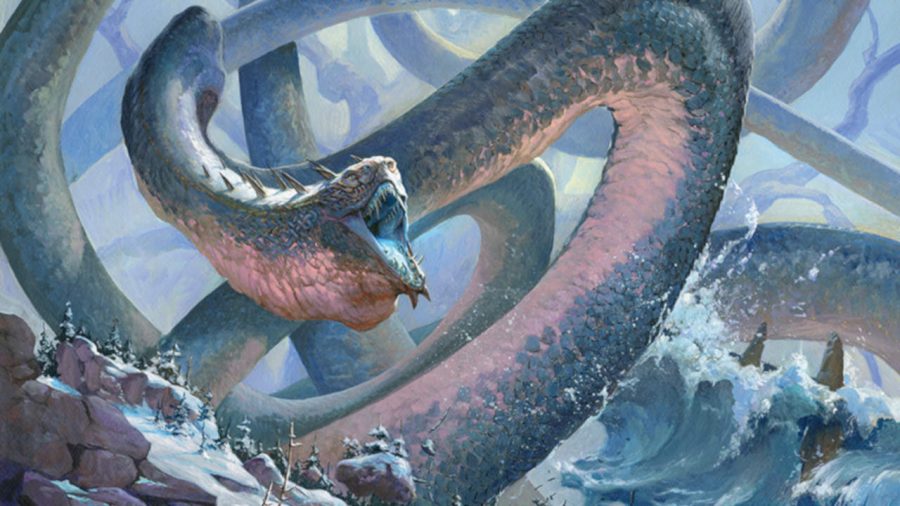
Reddish represents fiery magic, frenzied and raging, and suits ambitious playstyles that focus on quick damage-dealing through persistent, solid attacks. Green, meanwhile, is the magic of life and natural growth, supporting a slow, plodding playstyle that relies on the brute strength of a few powerful units to buckle opponents under their sheer weight.
If yous already decided on a playstyle for your deck, picking a colour shouldn't be too difficult. Detect the mana color that compliments, or straight aligns with, the style you're pursuing.
It's best to stick to cards of one color for your kickoff few decks
As a beginner, information technology'due south simplest to only include cards of a single colour (known every bit beingness mono-colour) for your offset few decks. Even competitive players tend to limit themselves to two or three. Keeping it simple will streamline the deck's playstyle and ameliorate your chances of always being able to play something on whatsoever given turn. You'd detest to take multiple lands on the table, but likewise few of whatsoever ane color to cast anything from your mitt.
Nonetheless, adding an additional color or ii to your deck broadens its scope, providing a wider range of cards to access. Don't recall likewise wildly, though. When combining colours, call up how the dissimilar colour themes volition complement, not scupper, i another.
Pick the land cards
Lands are the building blocks of any deck. Their mana fuels your units and is relied upon to cast units to the tabular array. Only there'due south a fine nuance to managing Land cards. Don't go cramming them into your deck haphazardly, or your hand-draws will exist flood with mana sources at the expense of other cardinal cards – and what proficient volition an additional land do you when the enemy is pounding your terminal defences and rapidly depleting your life?
Include besides few lands, nonetheless, and your mana base volition be besides weak, leaving you paralysed, unable to cast whatsoever spells equally your opponent builds a lead that you'll struggle to recoup.
A stable supply of lands will build your mana puddle
Choosing how many land cards to include is a fine science, often navigated through a healthy dollop of guesswork. A tried and tested benchmark is to have lands make upwards effectually 40% of your deck – about 25 cards for a 60-card deck, and around eighteen for a 40-carte. This helps ensure a stable supply of lands throughout a game to build your mana puddle, while avoiding any fallow fields in the early game or an unwelcome overabundance of surplus Swamps, Mountains or Islands after on.
When edifice a Magic deck, you may be tempted to cut downwards on Land cards. After all, they simply sit at that place, soaking up table space while providing an immaterial magical life force. The real action lies with the deadly Creatures or devious spell cards you're just dying to show off in combat.
Only exist wary of sacrificing too much Land for other things. Undercutting your mana base of operations will wreak havoc on the effectiveness of your deck, and it won't matter how impressive that snazzy Legendary Creature is if information technology never leaves your hand.

Pick the main cards
As with land cards, spend some fourth dimension thinking about what Creatures, Instants, Sorceries, Enchantments and Artifacts to include in your deck. If you lot've already selected a mana colour, take a playstyle in listen, and settled on a rough number of land cards, this shouldn't be too taxing.
Choose cards with complementary abilities that assist the management of your deck. If yous're looking to play ambitious, prioritise Creatures with low mana costs. If y'all're keen to dominate the playing field with a control strategy, be certain to include lots of removal cards to cleanse the board of enemy Creatures, and dispels to stymie their magic.
A touch of form:Read our Pathfinder classes guide
In virtually all game formats, players are immune no more 4 copies of any one card (barring Lands) in their deck. Does this mean you need four of each card? Nope. Consider the importance of each bill of fare. If you're reliant on it, and then stick three or four copies in to become a good strong chance of cartoon i early on. But if yous know you can win without seeing it in play, fewer copies are needed.
Pay boosted attention to the mana toll of your cards. Concentrating solely on high-cost cards will have you waiting all game to larn enough lands before you can deploy that one big, devastating play, running the risk that a speedier, more ambitious opponent could kill you off before y'all can pull the trigger.
Past the aforementioned token, including only depression-cost cards tin allow you unquestioned board control early on, merely if you neglect to end your enemy while you lot have the chance, you may end up pinned down and under-powered, unable to pause your opponent's pumped-up late-game defences.
Such 'slow' and 'fast' decks tin can both still be viable – simply more than ofttimes yous'll see something of a balance between the two. This is known as managing your 'mana curve' – the distribution of mana costs amongst cards in your deck. Settle on a distribution that supports your playstyle and allows you to play increasingly high-toll creatures and spells as the game progresses.
Choose a mana curve that supports your playstyle
As a good rule of thumb, most decks chase a fairly even mana bend, covering the full range of card costs, only with a concentration of iii- or four-cost cards. You'll want to play a card every turn, and this distribution helps prevent a overabundance of high- or low-toll cards coming to y'all at an inopportune time.
Of class, this rule isn't set in stone. Get creative, test new ideas, and see which mana curve works for you. As with well-nigh things in Magic: The Gathering, when building a deck, the best thing to exercise is to put your efforts through an acid test on the tabletop.

Go creative and have fun
So now you've congenital a fully functioning deck. Yous've decided on a playstyle, picked a mana colour, nerveless your State cards, and assembled the key cards that'll do your muddied work on the battlefield. Go along and conquer! But the journey doesn't end hither. Tweak your deck if you notice it's non quite working.
A bit gloomy:Read our beginner's guide to Gloomhaven
Maybe you need to plug in a few more Land cards to increase the available mana pool? Mayhap your mana curve was miscalculated? Substitute new cards and try new tactics – they might surprise yous.
Regardless, the most of import matter to keep in heed when edifice a Magic: The Gathering deck is your enjoyment of the game. Brand sure you're having fun edifice information technology, and yous'll probably have fun playing it.
mikesellwitheitay.blogspot.com
Source: https://www.wargamer.com/magic-the-gathering/build-a-deck
0 Response to "what do you need to play mtg standard"
Postar um comentário